The software isn't the product. The judgment is.

Diagnostica™ is our trial software, built in-house for diagnostic studies. You don't license it — it comes with every study we run.

Built for diagnostics, not bent toward them.

Generic trial software is built for drug trials and then bent, expensively, toward diagnostics. We built Diagnostica™ around what diagnostic studies actually run on — specimens, analyzers, source records, positivity, adjudication — configured around your protocol instead of asking the protocol to fit the software.

You're not really buying software. You're getting the protocol's judgment built into the work: a coordinator's second set of hands, a lab supervisor that never looks away, a protocol expert in every study — plus a compliant eTMF, EDC, and remote source capture, all 21 CFR Part 11.
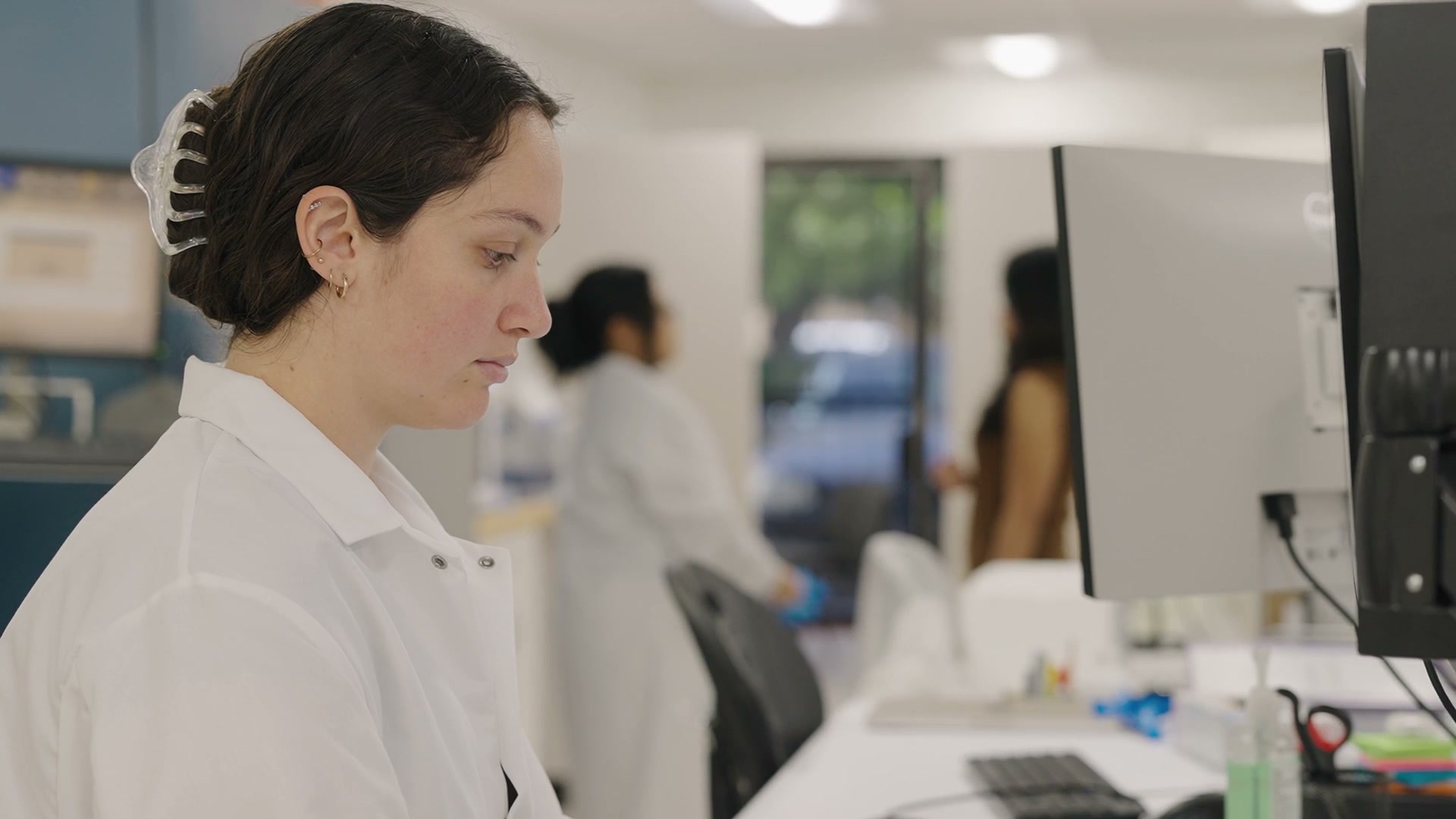
RDI lab — technologist at the analyzer workstation

Software is one part. The study runs on all three.

Each part does a job the other two can't.

Software, hardware, and people, working as one loop — source captured at the bench, every entry checked against it, and problems flagged before they become deviations.

Software
The judgment
The protocol's logic, thresholds, and clinical decisions, built into the workflow.
01Prompts the recommendation at the right visit — the clinician still makes the call
02Fires thresholds and flags the moment a value lands
03142 calculations · 1,900+ rules, per study
Hardware
The reach
The tools that put the system where the work actually happens.
01Scanners capture source at the bench, not after the fact
02Tablets follow the patient's visit, in the order it happens
03Barcodes track every tube, volume, and cryobox position
People
The check
The team that keeps the record clean enough to trust over time.
01Coordinators enter against a live workflow, not a blank form
02Our team verifies every entry against source between visits
03Monitors catch what's slipping before it becomes a deviation
software + hardware + people  ·  one loop, running continuously

Same platform. Two very different studies.

Here's what Diagnostica™ looks like when the workflow is shaped around the protocol — not the other way around.

◆ Diagnostica™ · Visit 7 · Month 6NEEDS REVIEW
Tacrolimus is below target — review the dose before this visit closes.
4.1 ng/mL · below rangetarget 5.0–15.0
Review dose
Flagged automatically · the coordinator decides.
What the coordinator sees at the visit: Diagnostica™ reads the result and prompts the next step.

The protocol's dosing algorithm, built into the visit.

This transplant protocol included optional, algorithm-guided immunosuppression decisions that are easy to miss in a PDF. A standard EDC only records what gets entered. Diagnostica™ builds the protocol's algorithm into the visit workflow: when a result comes in, it shows the coordinator what the protocol recommends and why. The software flags the recommendation; the clinician makes the call.

◆ Diagnostica™ · STB-0859 · Subj 024ON SCHEDULE
Next testing timepoints
Consent · baseline drawJun 1
TodayJun 4
T2 · +14 daysJun 15
T3 · +30 daysJul 1
Every window counted from consent — nothing gets missed.
What the lab sees: Diagnostica™ tracks every timepoint window from consent.

Software that supervises the lab schedule — and monitors the study in real time.

No one can hold this schedule in their head: 27 analytes with their own rules, ~50 subjects each, 138 timepoints apiece, four storage conditions, two years. So the software does the supervising — it knows what's due, flags what's slipping before it becomes a deviation, and catches an out-of-spec result the moment it lands.

See how Diagnostica™ can change your study.